The ROI of Responding to Reviews: How to Work It Out
MagicReply drafts a reply to each Google review for you to edit and post. Generate up to 15 AI replies and post up to 5 to Google in total, free.
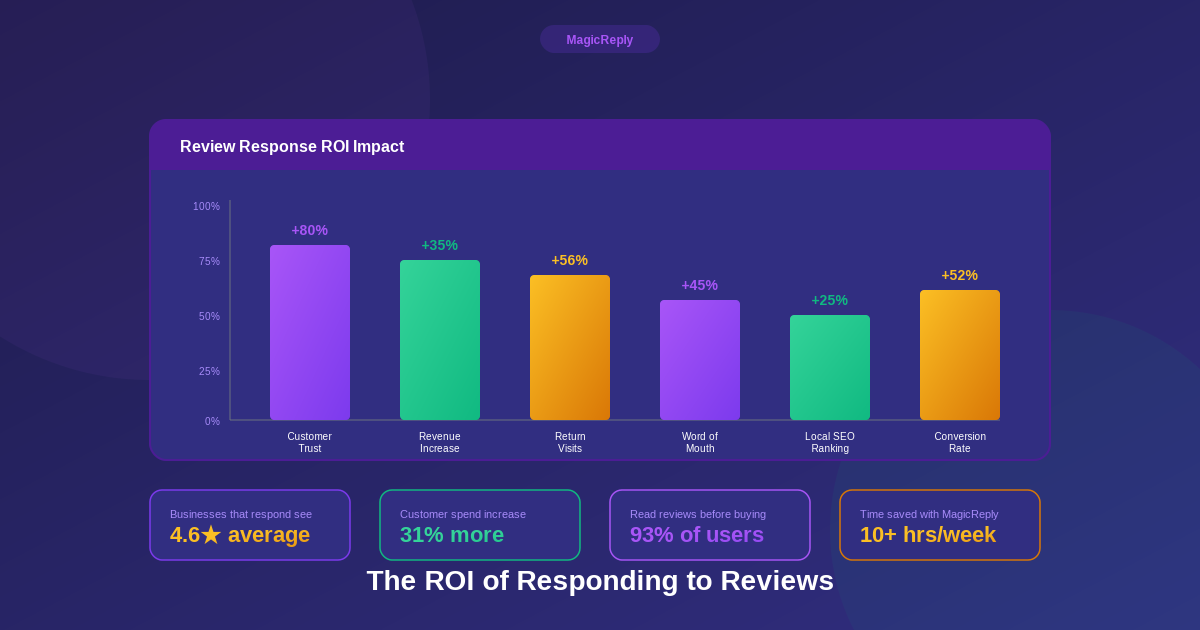
Think responding to reviews is a "nice to have"? It is one of the cheapest things a local business can do in public, and it is easy to work out whether it is worth your time.
This post does not quote surprising statistics. Most of the ones that circulate have no source we could check. Instead, here is what a reply does, what Google says about reviews, and a way to run the numbers with your own figures.
What a Reply Does
A reply is a public signal that you are paying attention:
- It thanks the customer who took the time to write.
- On a negative review, it gives the next reader your side next to the complaint.
- It shows anyone comparing businesses that the profile is looked after.
- It gives an unhappy customer a way to reach you and a reason to come back.
The takeaway: Responding to reviews isn't just customer service. It's a trust-building habit that keeps working for as long as the reply sits on your profile.
Calculating Your Actual ROI
Let's make this concrete. Here's a simple framework to estimate the ROI for your specific business.
The Time Investment
Time yourself on your next few replies. A thoughtful reply written from scratch usually takes a few minutes. Multiply by the reviews you get in a month, then add the time spent checking for new reviews and logging in.
With an AI tool that drafts the reply for you, the writing part shrinks to reading and editing a draft. Time that too, so you are comparing your own numbers.
The Revenue Side
The value of a reply shows up in a few places. None of them comes with a guaranteed dollar figure.
1. Direct customer recovery
A reply to a negative review gives that customer a reason to update the story, and it gives everyone else both sides.
2. New customer acquisition
People comparing businesses read the replies as well as the reviews. A calm, professional reply to a complaint can be what tips someone toward you.
3. Google visibility
Google's help page Tips to improve your local ranking on Google says "more reviews and positive ratings can help your business's local ranking," and that "positive reviews and helpful replies can help your business stand out." It does not say replies themselves raise your ranking, so we won't claim they do.
4. Review volume
When customers see that you read and respond to reviews, leaving one feels worthwhile. More reviews give the next customer more to go on.
The Break-Even Math
You don't need a study to decide whether replying pays. You need three numbers of your own:
- Hours a month you spend replying
- What an hour of your time is worth
- What one new customer is worth to you
Multiply the first two to get the monthly cost. Divide that by the third to see how many extra customers a month replies need to win to pay for themselves.
For example, with made-up numbers: 2 hours a month at $50 an hour is $100. If a customer is worth $75 to you, replies pay for themselves at about 2 extra customers a month. Put in your own figures and decide whether that is believable for your business.
The Hidden Benefits You Can't Measure in Dollars
Beyond direct revenue, responding to reviews delivers benefits that are harder to quantify but equally valuable:
Free Market Research
Reviews tell you what customers love and hate. A pattern of "great food, slow service" reviews tells you exactly where to look. Your responses show customers (and your team) that you're listening.
Competitive Differentiation
Look at the profiles of the businesses you compete with. If their reviews sit without replies, answering every one of yours sets you apart where customers compare you side by side.
Team Accountability
When employees know that customer feedback gets a public response from management, it keeps service front of mind. It creates a culture of accountability without being punitive.
Brand Voice Development
Consistently responding to reviews forces you to develop and maintain a clear brand voice. Over time, this voice becomes a recognizable part of your brand identity.
What Happens When You DON'T Respond
The cost of inaction is real, even if it is hard to count:
- Unanswered negative reviews can look like admissions to potential customers
- Competitors who respond look more attentive to the customers who were comparing you
- Employees feel unsupported when management ignores public criticism
- Customers who feel ignored may take the complaint somewhere more public, such as social media
A negative review with no reply is read without your side of the story. A short, professional reply now is cheaper than trying to win back the people who read it alone.
The Compounding Effect
Here's the useful thing about reviews: the benefits build on each other.
- You respond to reviews → customers feel valued
- Valued customers return → some leave more positive reviews
- More reviews and positive ratings → Google says these can help local ranking
- More visibility → more new customers
- More customers → more reviews → cycle repeats
Businesses that keep replying month after month keep the profile from looking ignored. That is the part you can see: recent replies next to recent reviews.
Make the Replies Quicker
Whether replying pays off for you comes down to your numbers. The part you can control is how long each reply takes.
MagicReply drafts personal, brand-voice-matched replies to your Google reviews. You read the draft, edit it if you need to, and post it, so the time side of the math gets smaller.
Reply to every Google review with MagicReply
Connect your Business Profile and get a draft for each review. Start free: generate up to 15 AI replies and post up to 5 to Google in total.